

 Favorite (0)
The reader provides heating, multiple excitation sources, and optical read-out channels for each zone. Its first commercial application targets food and drink spoilage detection using LAMP assays for bacteria such as Acetobacter and Lactobacillus, plus an internal control. Results are semi-quantitative, based on time-to-positivity thresholds, with broader diagnostic applications already demonstrated.
A lab-on-a-chip (LOC) is a microfluidic platform that incorporates various laboratory functions. Lab-on-a-Chip technology has many advantages for testing and monitoring processes in medical diagnostics, pharmaceuticals, and life sciences. Micronit, a leader in lab-on-a-chip manufacturing, is closely involved in solutions that are used in food safety.
In cases where the lab-on-a-chip is used in a point-of-care diagnostics application, mostly the total device will consist of a consumable and a readout system. The lab-on-a-chip consumable is the platform that contains the actual assay workflow. It is a chip with a network of microfluidic channels and features like valves, pumps, sensors and reagents. The sample material is applied to this chip, after which the test takes place. In some cases, a readout system can be incorporated into the LOC consumable (as is done in most home use virus tests or pregnancy tests). Mostly however, a separate readout device will be required to obtain the test results. The reader is a permanent device, whilst the lab on a chip is in most cases a disposable, suitable for one-time use only. Polymer is a preferred substrate material for LOC consumables, not in the least because it is very attractive from a costs point of view.
What are the benefits of converting conventional lab processes to a lab-on-a-chip? Let’s take a closer look at four major advantages of lab on a chip technology.
The main advantage of a lab-on-a-chip assay is its compact size. By miniaturizing the total assay workflow, less sample material is needed and the reaction and analysis times are shorter. Performing a test on a LOC is therefore faster and more efficient.
When several laboratory steps are incorporated into a lab-on-a-chip platform, this leads to an automated execution of the complete test. Assay workflow automation is a great advantage because it fully relies on pre-set specifications and thus eliminates the risk of human errors. As a result, less user training is needed, sometimes even making it possible for untrained users to perform analyses. Furthermore, the automation frees up the user to perform other activities.
lab-on-a-chip devices are, due to their reduced size, ideally suited to be used in parallel. This creates opportunities for high-throughput screening: simultaneously running multiple tests. Automated large-scale screening of biological compounds can greatly accelerate processes in the fields of drug discovery and virus testing.
Point-of-care means that tests and treatments are carried out directly at the required location. Lab-on-a-chip technology offers excellent opportunities for this. All elements that are required to perform a test are available on the few square inches of the platform. The total assay can be completed on-site in a fast and efficient manner. This abolishes the need to send sample material and test results back and forth to a lab. For these applications the minimal training needed to use a LOC is important, as trained analysts are not generally located at the point of care.
There are numerous potential applications for lab-on-a-chip devices, including:
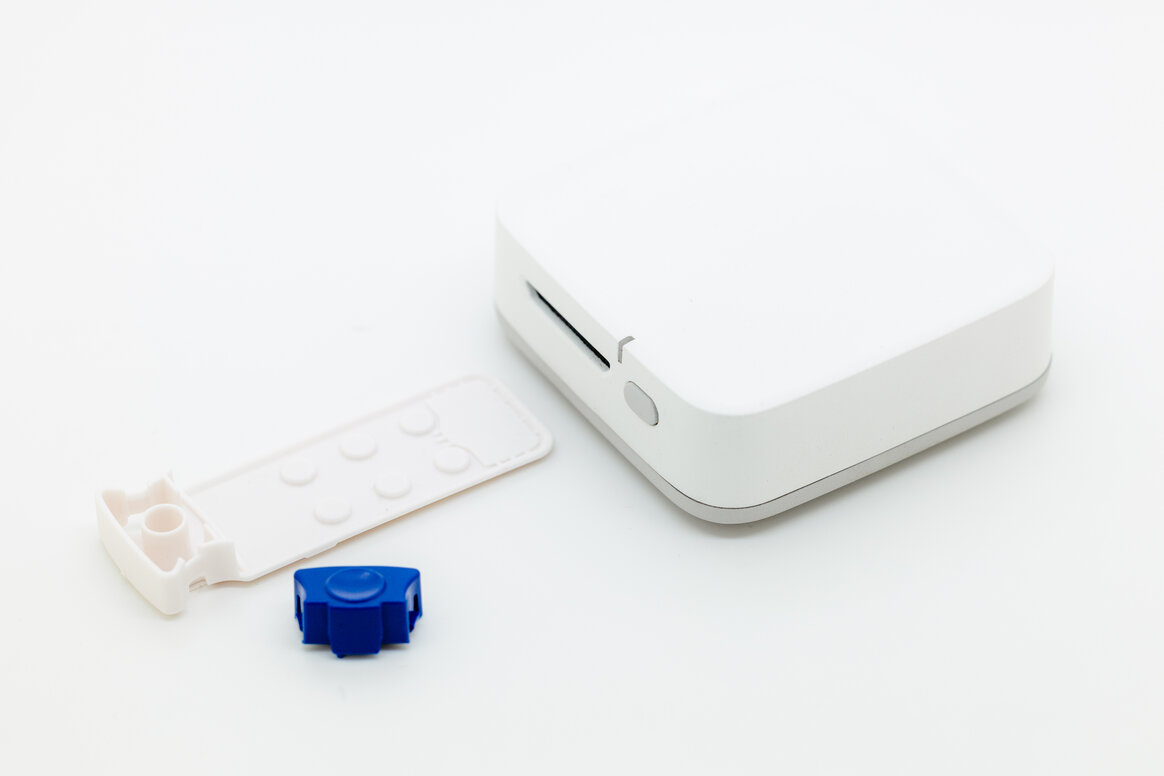
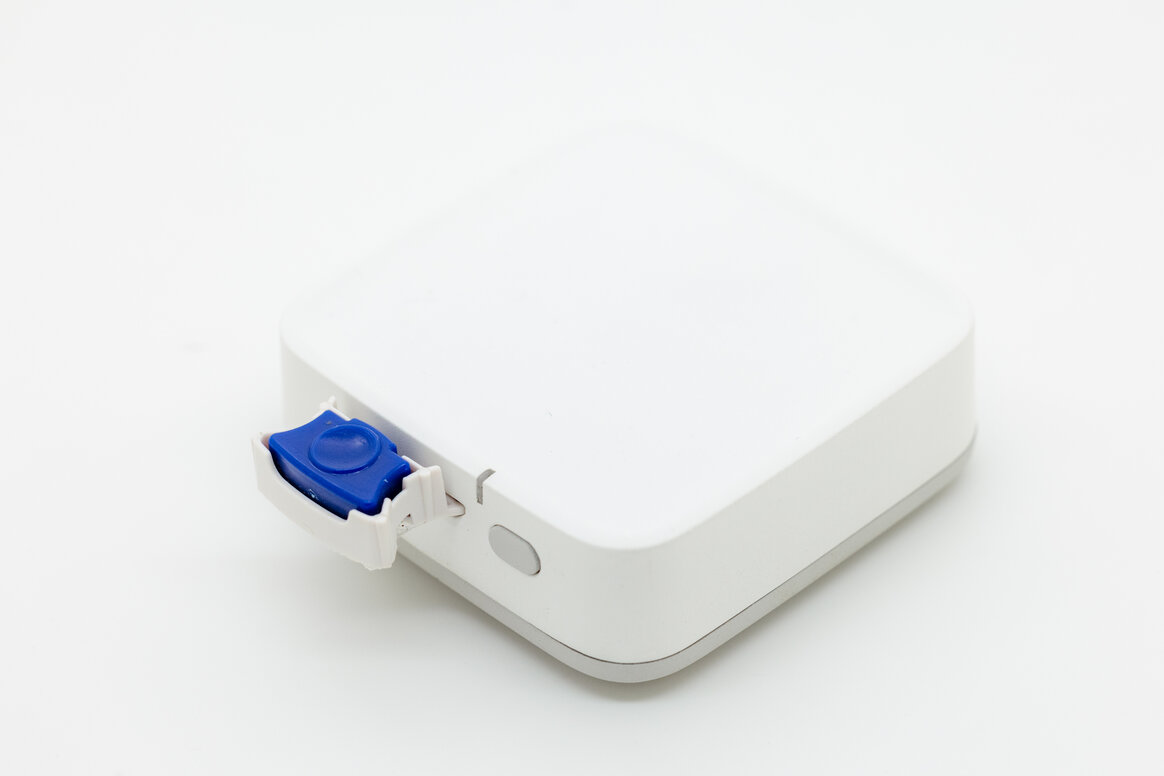
The MYKEE platform is a lab-on-a-chip system for isothermal nucleic acid amplification, designed to simplify field testing. It is an ultra-compact, battery-operated, point-of-use system for isothermal nucleic acid amplification, designed to simplify field testing. It combines a reusable web-app-controlled reader with disposable cartridges containing six dried-reagent reaction wells. Integrated microfluidics enable sample metering, controlled filling, and cross-contamination prevention. The reader provides heating, multiple excitation sources, and optical read-out channels for each zone. Its first commercial application targets food and drink spoilage detection using LAMP assays for bacteria such as Acetobacter and Lactobacillus, plus an internal control. Results are semi-quantitative, based on time-to-positivity thresholds, with broader diagnostic applications already demonstrated.
At Micronit, a team of designers and engineers with microfluidic experience assists in the transfer of an existing process onto a microfluidic lab-on-a-chip, directly taking manufacturability into account and selecting appropriate materials. We have the capabilities to process glass, silicon, polymer and hybrid combinations. These are all materials that are used often in the production of microfluidics-based devices, each with their own benefits. High-end lab-on-a-chips are generally manufactured in glass, as glass offers the best optical transparency, chemical inertness and surface flatness. However, when structures with high aspect ratios are required (i.e., very deep and narrow channels), silicon is a more suitable substrate material. In recent years, there is also a large demand for LOC devices in polymer. Polymers are by far the least expensive material of the three and is therefore mostly used for lab-on-a-chip disposables.
Micronit has been providing lab-on-a-chip systems for over 20 years, contributing to the development of the diagnostics market by producing increasingly sophisticated and complex lab-on-a-chip devices. We are a leading global player in this market with a unique combination of in-house design, engineering and manufacturing capabilities. Instead of having to sit down with multiple parties, our customers can benefit from a streamlined flow from lab to fab. Next to that, we are able to process all most-used materials within lab-on-a-chip manufacturing and our production facility is ISO 9001:2015 and ISO 13485:2016 certified.