
 Favorite (0)
In medical laser therapy, the fiber size is only one part of the equation. The wavelength and fiber geometry also determine how laser energy reaches the target tissue. Two clinical applications illustrate why both must be considered together.
Minimally invasive laser therapies rely on precise energy delivery. Optical fibers guide laser light to the treatment site, but transporting light is only the first step. The therapeutic effect also depends on where the energy is absorbed and how it reaches the tissue.
Wavelength influences absorption by tissue components such as water and hemoglobin. Fiber geometry influences the direction or spatial distribution of the emitted light. Together with laser power and treatment parameters, both affect the resulting tissue interaction.
Water absorbs laser radiation much more strongly at 1,470 nm and particularly at 1,940 nm than at 980 nm. In endovenous laser therapy, this enables laser radiation to be absorbed by water in the blood and vein wall and converted into heat. However, wavelength alone does not determine how energy is delivered to the vessel.
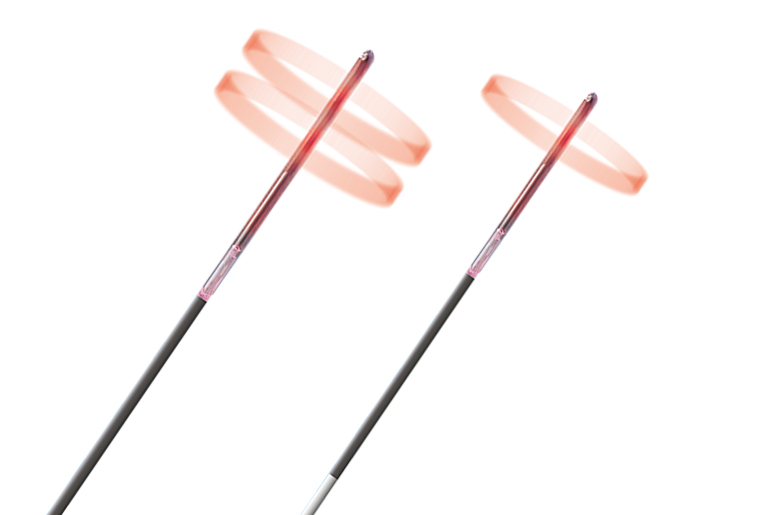
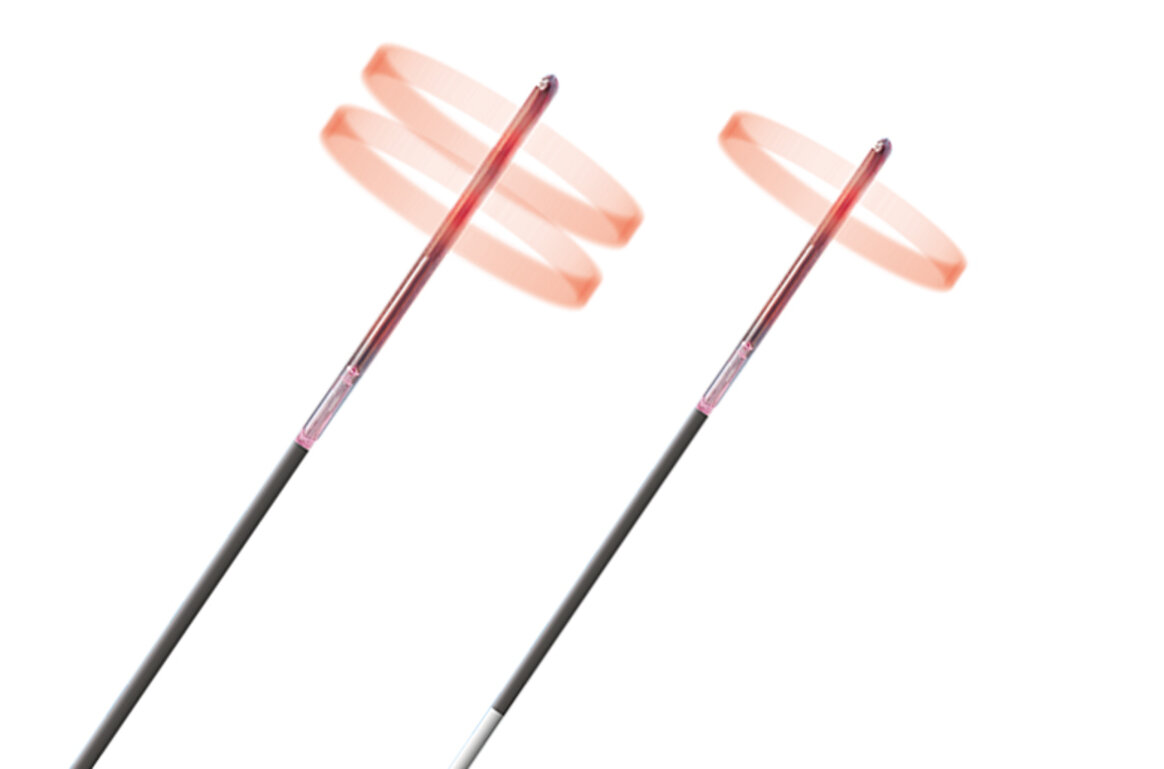
Conventional bare-tip fibers emit laser light primarily along the fiber axis, while radial fiber designs direct the light circumferentially toward the surrounding vein wall. This difference in emission geometry influences how laser energy is distributed within the vessel.
Combining a water-absorbed wavelength such as 1,470 or 1,940 nm with radial or bi-radial emission brings absorption characteristics and delivery geometry together. Circumferential energy delivery supports a controlled endothermal effect that causes collagen shrinkage and contraction of the vein wall. The precise thermal outcome also depends on the treatment settings.
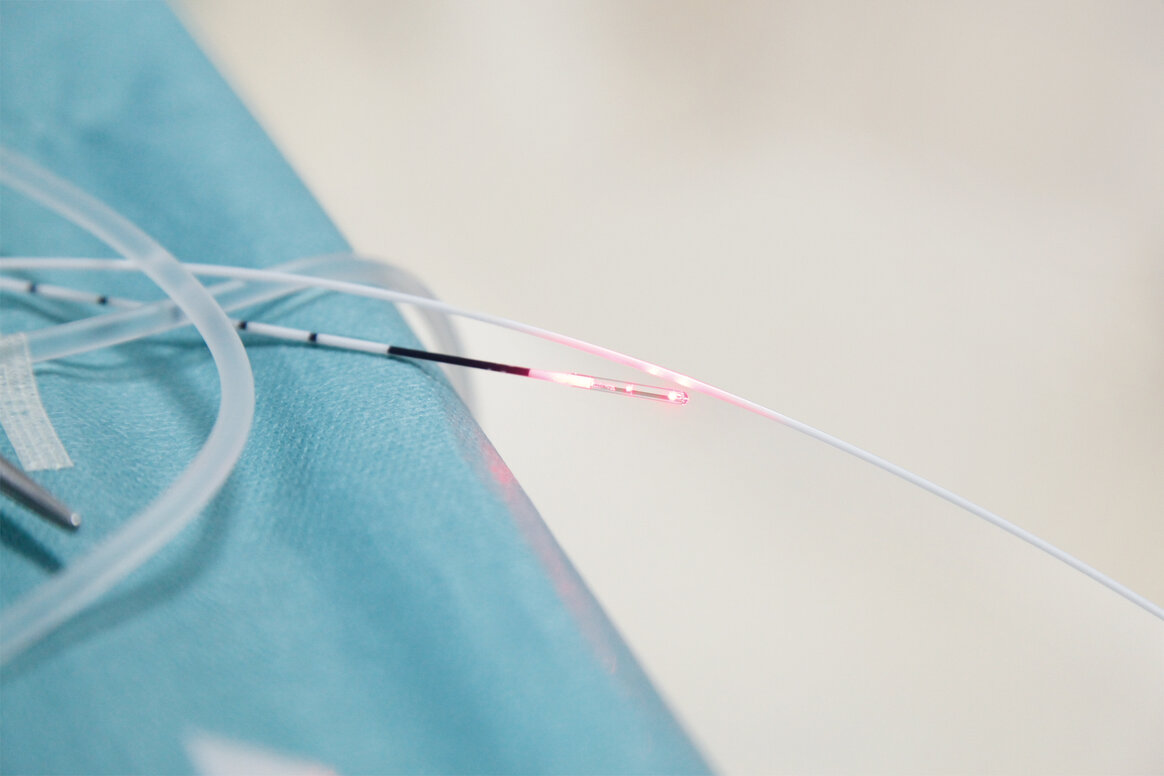
Fiber geometry can serve another function: influencing the intensity distribution across the emitted beam. This is relevant in laser treatment of e.g. non-muscle-invasive bladder tumors, where 980 nm is used for coagulation and 1,470 nm for ablation and cutting.
Depending on the modal distribution, a conventional circular-core fiber has a Gaussian intensity distribution. Such a profile may produce more localized tissue interaction. Non-circular-core (NCC) geometries provide a more homogeneous output intensity distribution, supporting a broader, more even interaction during surface-oriented ablation and coagulation.
Unlike radial emission, which primarily changes the direction of light delivery, NCC geometry addresses the intensity profile of the output beam.
These examples show why an optical fiber is more than a passive light guide. The desired tissue interaction can place specific requirements on fiber geometry and probe design from the earliest stages of medical-device development.
For OEM developers, the relevant question is therefore not simply which laser or fiber to select, but which combination of wavelength, fiber geometry, laser settings and probe design suits the intended application. CeramOptec and biolitec bring together optical-fiber manufacturing, medical-probe development, application and laser-system expertise, alongside sterilization, quality and regulatory capabilities.
fiber geometry and probe design