Member profile



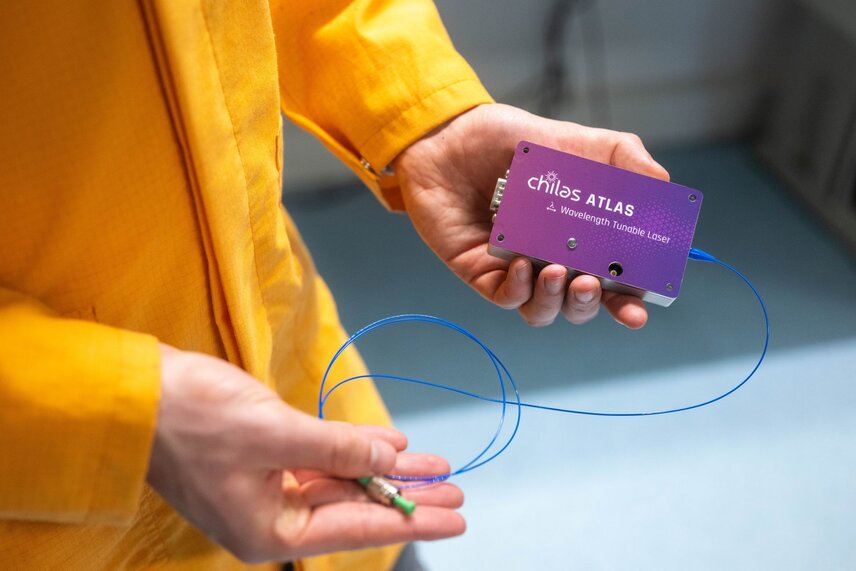
Chilas has officially launched the ATLAS 1310, a new wavelength-tunable laser for the O-band (1265–1365 nm). The system is now available for order, with the first units already shipping to customers. The new laser addresses the growing demand for high-performance light sources in AI infrastructure, data center interconnects, optical communications, and optical device testing.
The ATLAS 1310 offers a 100 nm tuning range with 10 pm resolution, an intrinsic linewidth of ≤ 10 kHz, and a fiber output power of at least 13 dBm at the center wavelength. Like all products in the ATLAS series, it features a compact design without moving parts and includes an intuitive graphical user interface as well as a Python library for straightforward integration into laboratory and industrial environments.
The laser is based on Chilas' hybrid photonic integration platform, combining a silicon nitride passive chip designed by Epiphany Design and manufactured by LioniX International with an InP gain chip supplied by the Fraunhofer Heinrich Hertz Institute (HHI).
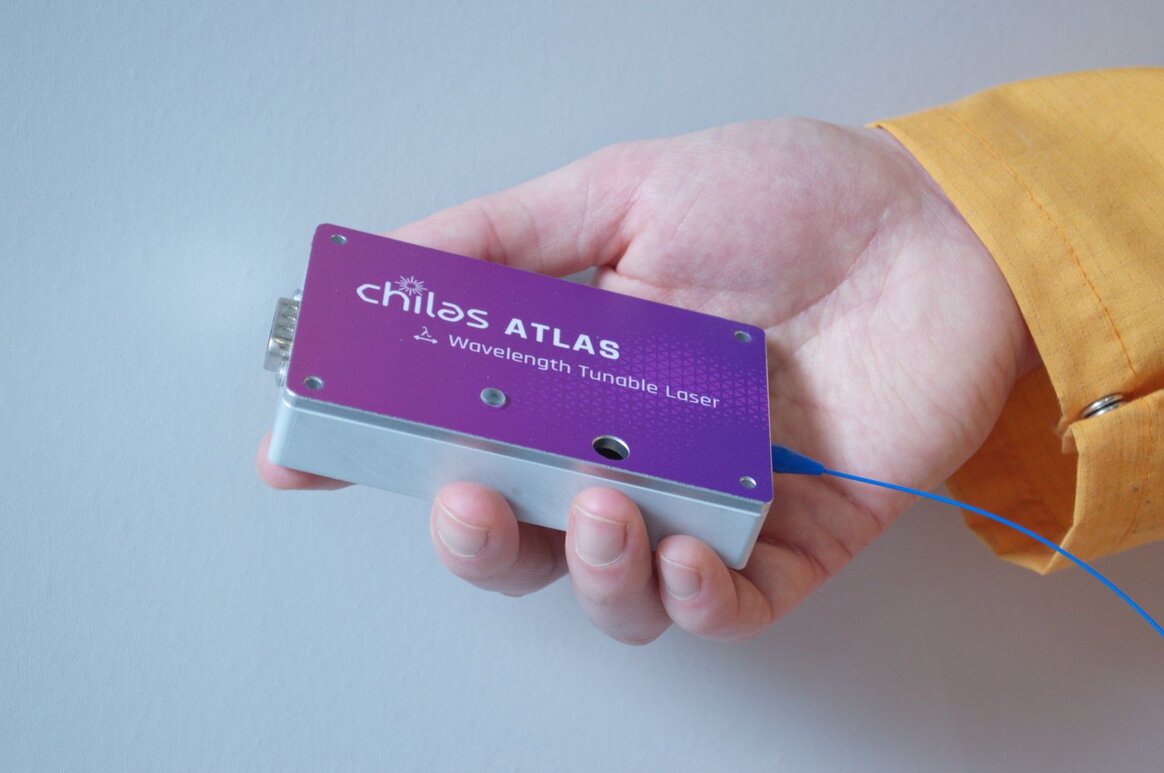
Following its public debut at Photonics West and OFC 2026, the ATLAS 1310 generated significant interest from the photonics community. According to Chilas, pre-orders exceeded expectations, and the company is currently delivering the first production batch to customers.
In parallel with the launch of the ATLAS 1310, Chilas is expanding its O-band portfolio with the development of the POLARIS O-band, a frequency-stabilized single-wavelength laser designed for applications requiring exceptional long-term stability. Further details are expected to be announced in the near future.
 (300 x 200 mm) (1).png)
The Dutch companies Epiphany Design and Chilas Lasers have joined forces to accelerate the integration of high-performance lasers into photonic …
.png)
The new EU Packaging and Packaging Waste Regulation raises many practical questions for companies: Which requirements apply to their packaging? …

Four finalists, two new IVAM members and outstanding technologies: the Medical Manufacturing Asia Marketing Excellence Award highlighted innovative companies while …

 (1).1.png)