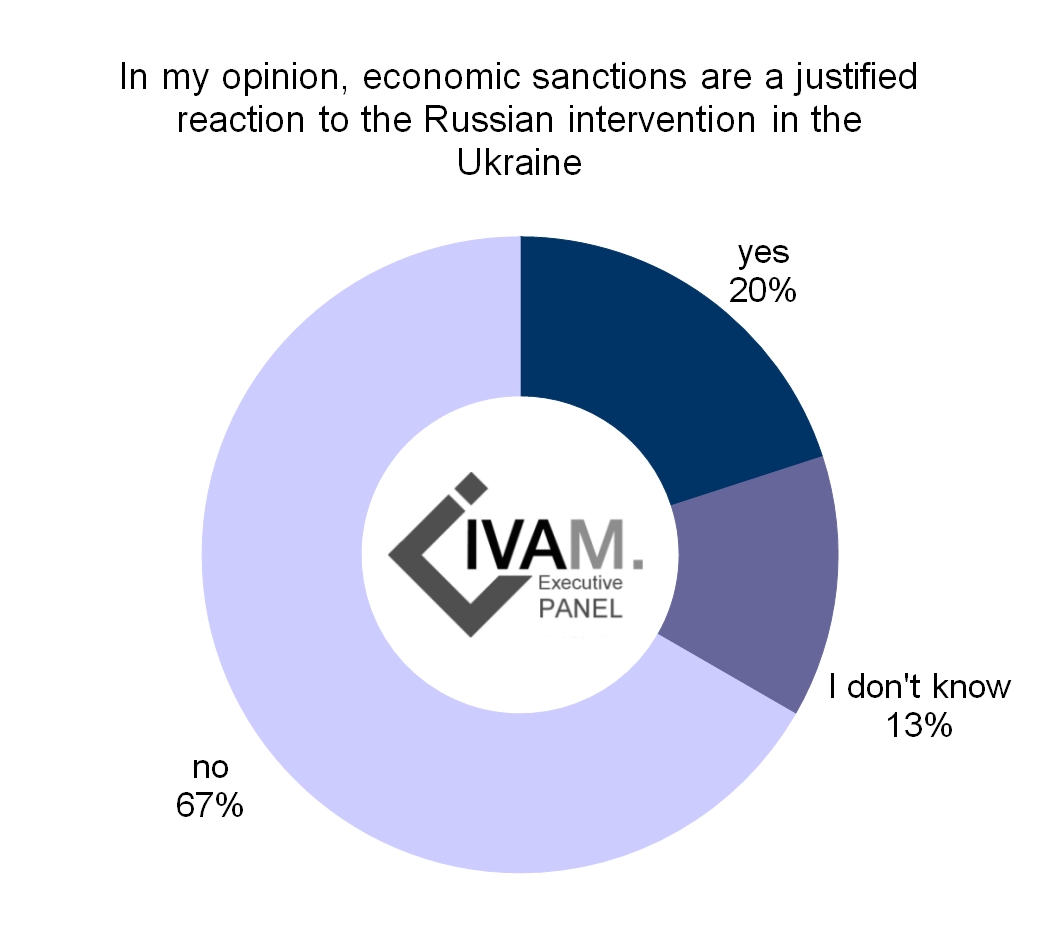
Economic sanctions against Russia in response to the Crimean conflict are rather unpopular among representatives of the micro- and nanotechnology industry in Germany. In a short survey, the IVAM Microtechnology Network asked selected industry experts – the IVAM Executive Panel – for their opinion.
Two thirds of respondents say that economic sanctions are not an adequate response to the Crimean crisis. Sanctions would mainly hit the industry that has not been cause of the conflict, and will not help to solve the actual conflict between Russia and Ukraine. Politically motivated conflicts should be solved by political means.
In addition, some experts say, there is a danger that an embargo might play in the hand of the Russian Federation, trigger further “unpopular” activities and might even allow Putin to deny his own responsibility for the economic weakness of Russia, caused by his deficient policy, and blame Western nations instead.
Just little more than half (53 %) of the interviewed experts expect that sanctions would have a significant impact on the micro- and nanotechnology industry in Germany. They disagree with some economists’ assessments that sanctions would mainly affect the Russian economy and have no major impact on the German industry, export, and jobs.
In the field of micro- and nanotechnology, there is an intensive cooperation between Russia and Germany. In recent years, numerous high-tech initiatives have developed in which Germany is often preferred partner of the Russian industry. Sanctions, the industry representatives say, would put ongoing projects at risk and impede the generation of new projects. In addition, Russia is a potentially large market for the German industry, since it does not yet have many proprietary micro- and nanotechnologies.
Due to this broad interaction of the high-tech industries of both countries, imposing sanctions now would affect the business of the German micro- and nanotechnology industry even in the long term, 40 % of the interviewed experts say.